

Façades, fences & balustrades
Glass Balustrades & Railings
Made-to-measure glass balustrade - safety, transparency and design
Safety without blocking the view.
Request a quote for this product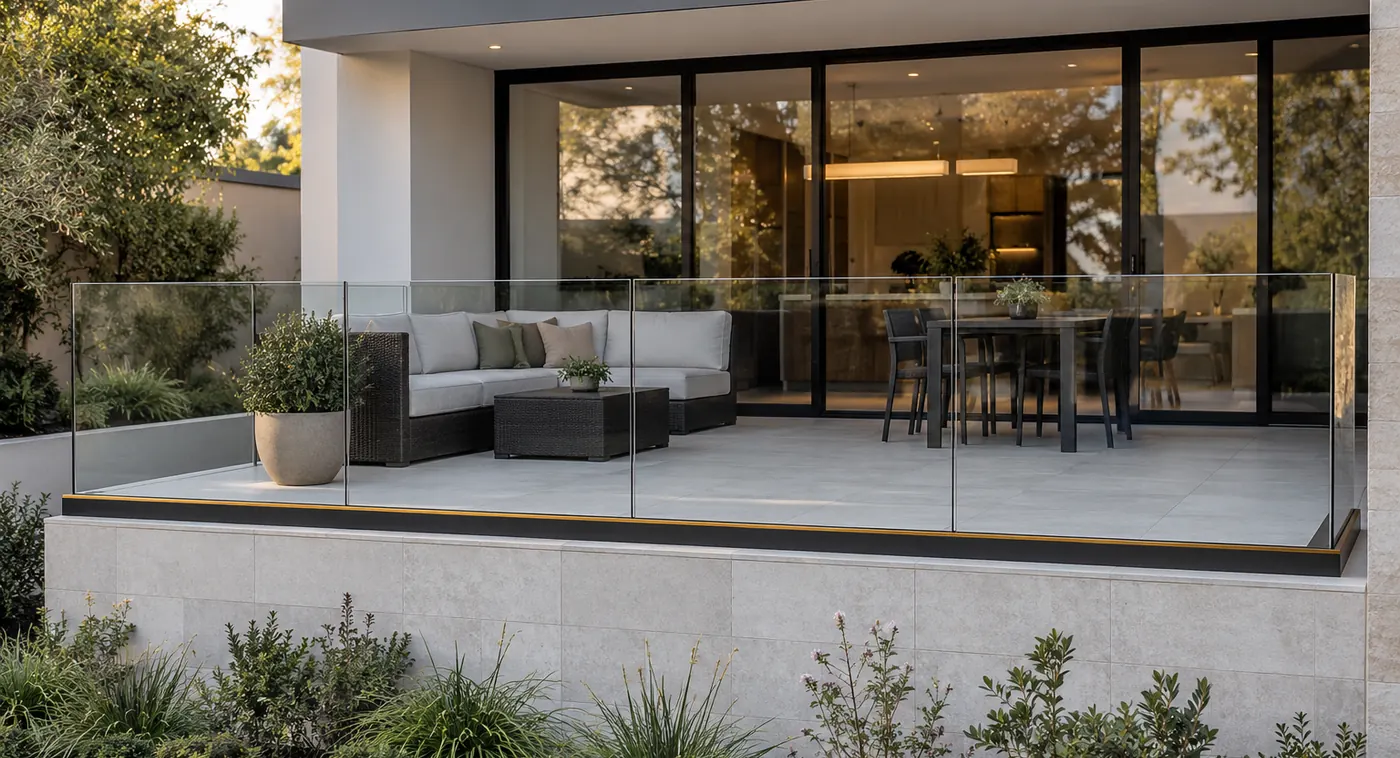
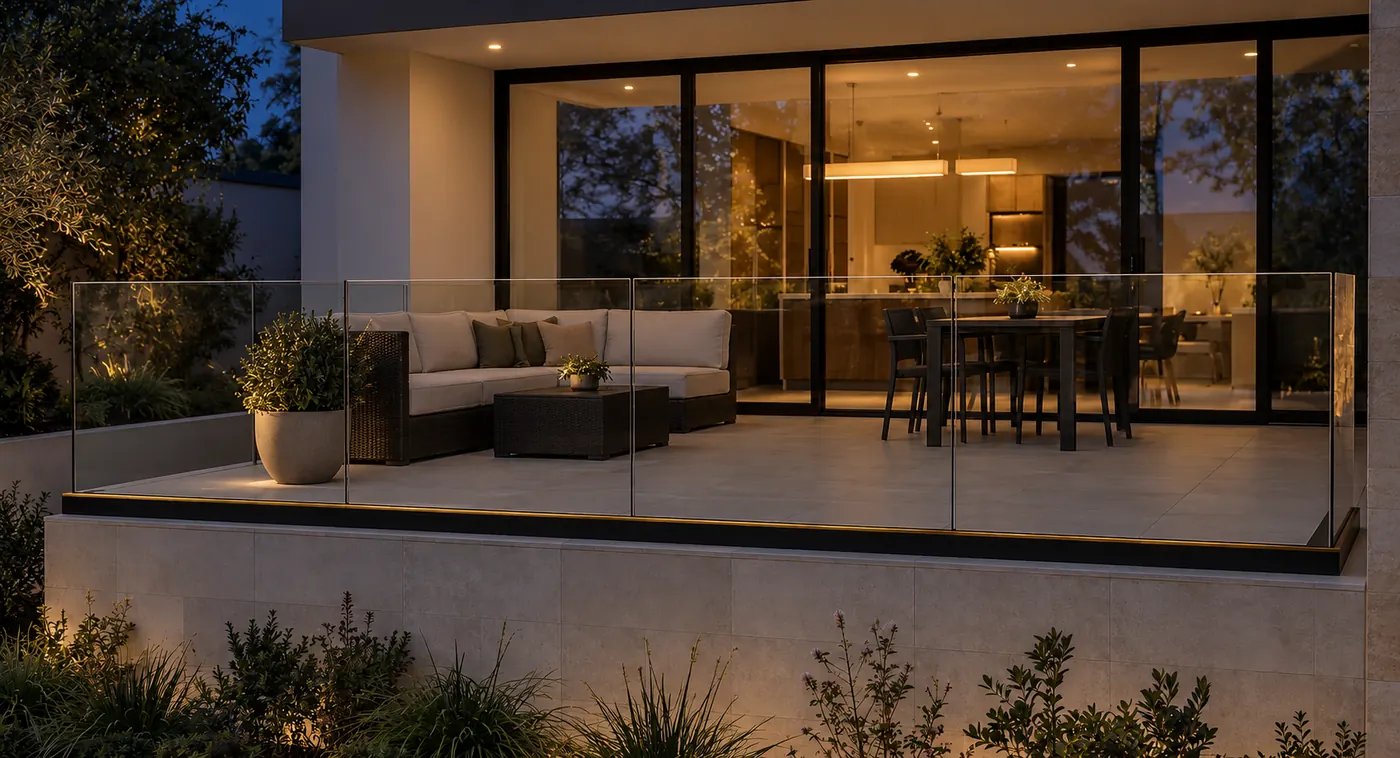
Made-to-measure glass balustrades and railings for terraces and balconies: laminated safety glass, low-profile aluminium base, clear, opal or tinted glass.
Learn more
HANDELIS glass balustrades and railings combine the transparency of glass with the slimness of aluminium to secure terraces, balconies and raised areas without creating a significant visual barrier.
Each installation is made to measure to fit the dimensions, angles and configuration of the project precisely. The system can be made in clear, opal or tinted glass.
The chosen HANDELIS configuration uses laminated safety glass, subject to technical approval of the complete project.
Illustrations
Made-to-measure manufacturing
Each balustrade is adapted to the dimensions, angles and constraints of the project.
Laminated glass
Glass sheets bonded by interlayer films.
Maximum transparency
To preserve the view, light and sense of space.
Low-profile aluminium base
A discreet design that puts the glass centre stage.
Lengths up to approx. 6 m
Profile available in a single piece on the reference system.
Coordinated corner profiles
For clean visual continuity at changes of direction.
Terraces, balconies and areas requiring protection
3
A solution suited to balconies, raised terraces, roof terraces, loggias, walkways and changes in level. Unlike a solid balustrade, glass secures the space while letting light through: views remain open, giving terraces and balconies a greater sense of space.
Outdoor spaces
Balconies and raised terraces, terraces on slabs or roof terraces, loggias and walkways subject to survey, changes in level.
Building types
Detached houses, apartment buildings and commercial buildings.
Specific uses
Stairs, landings or mezzanines only with a specifically approved configuration and sizing.
Laminated glass
3
The HANDELIS configuration uses laminated safety glass. In the event of breakage, the fragments are held in place by the interlayers, improving safety compared with conventional monolithic glass. Thickness alone is not enough to approve a balustrade: the height, panel width, loads, profile, anchors, substrate and applicable regulations are checked for each project.
Clear glass
To retain maximum transparency, natural light and views outside.
Opal glass
To provide greater privacy while retaining a bright, contemporary appearance.
Tinted glass
For a more architectural finish and enhanced privacy depending on the chosen tint.
Profile & details
4
A discreet structure that puts the glass centre stage. The aluminium finishes are designed to withstand outdoor conditions and keep their appearance for years with minimal maintenance.
Base profile
The reference system uses an aluminium base profile approx. 11.5 cm high. Its low line minimises the visual impact of the structure.
Profile length
Lengths of up to approx. 6 m in a single piece are specified for the reference system, reducing the number of joints on long runs.
Corners
Coordinated corner profiles can be used to ensure visual continuity and a clean finish where the balustrade changes direction. Dimensions and connections are defined according to the actual geometry of the project.
Eloxal
In addition to RAL 7016 and RAL 9005, an anodised aluminium finish (Eloxal) is possible depending on configuration.
Precise installation is essential
4
Substrate
A stable, strong substrate compatible with the loads transmitted by the balustrade.
Setting out
Setting out, level and alignment of the profile precisely checked.
Anchors & fixings
Anchors suited to the substrate and the loads of the system; type and depth of fixings determined according to the substrate and the technical study.
Final check
Clearances between panels and corner profiles carefully checked, followed by a final check of panel retention, alignment and finish.
Structure colours
Maintenance
Clean the glass with products suitable for glazing and a non-abrasive cloth. The aluminium profiles require little maintenance and can generally be cleaned with water and a mild detergent.
Exact specifications depend on the model and its configuration. Every project is technically validated before production.